
Which Apply to You? Illinois, Chicago, and Cook County Paid Leave Laws

If you work in Illinois, your right to paid leave depends on where you work. In addition to Illinois' statewide paid leave law, employees working in Chicago and throughout suburban Cook County may have additional protections that provide greater benefits and stronger employee rights.
Here's what every Illinois employee should know.
Three Different Paid Leave Laws May Apply
Illinois employees may be covered by one or more of the following:
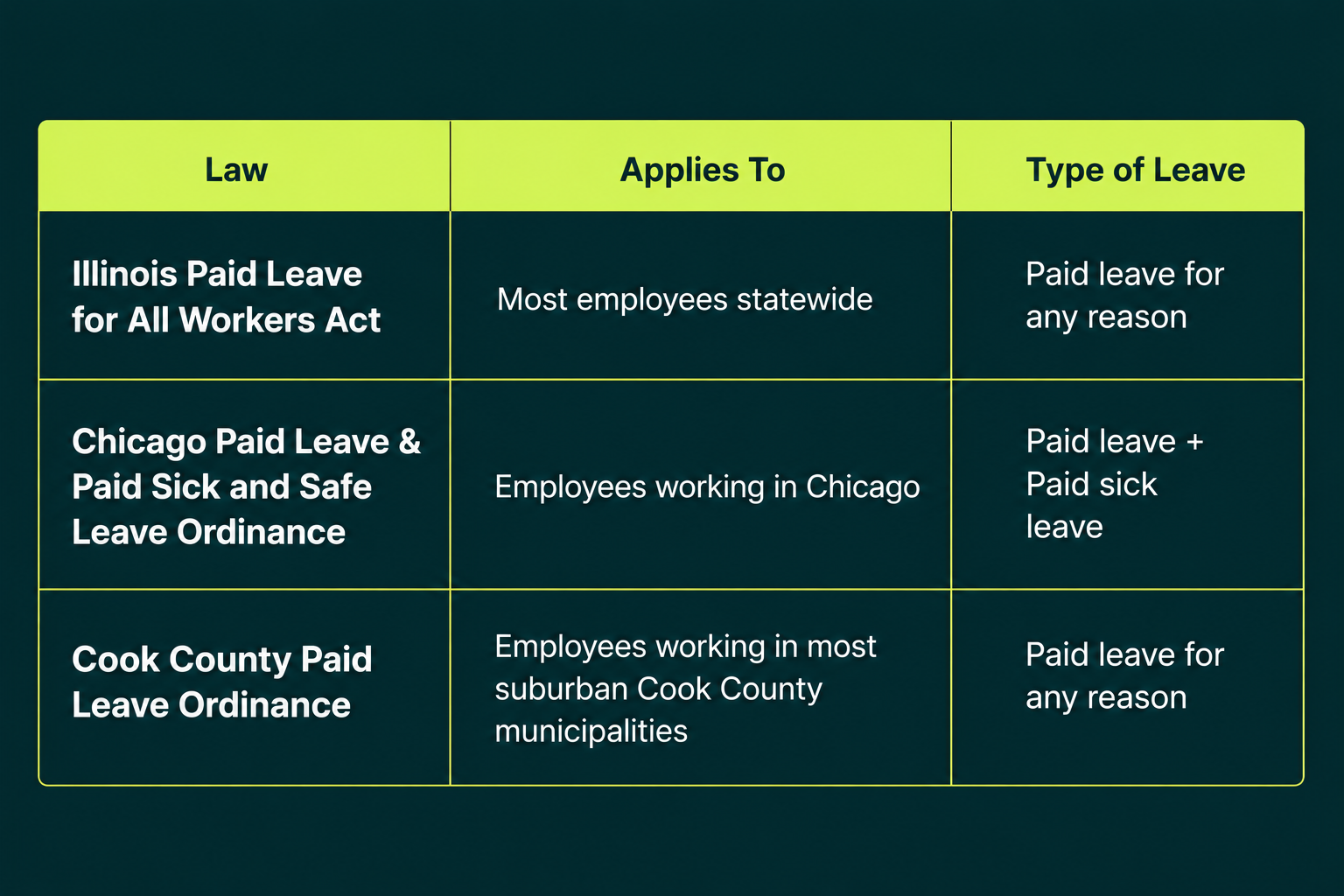
Because local ordinances often provide greater protections than state law, employers generally must comply with whichever law offers employees the greater benefit.
Illinois Paid Leave for All Workers Act
Effective January 1, 2024, Illinois became one of the first states to require paid leave that employees can use for virtually any reason.
Most Employees Earn
✔ One hour of paid leave for every 40 hours worked
✔ Up to 40 hours of paid leave during a 12-month period
✔ Leave may generally begin after 90 days of employment.
Chicago Provides Two Separate Types of Paid Leave
Chicago's ordinance is significantly broader.
Eligible employees generally earn:
Paid Leave
Up to 40 hours annually that may be used for any reason.
Examples include:
Vacation
Family events
Mental health days
Personal appointments
Religious observances
Rest and recreation
Paid Sick and Safe Leave
Employees also earn up to an additional 40 hours of paid sick leave each year.
This leave may be used for:
Personal illness
Medical appointments
Caring for family members
Domestic violence
Sexual assault
Stalking
Public health emergencies
School or workplace closures
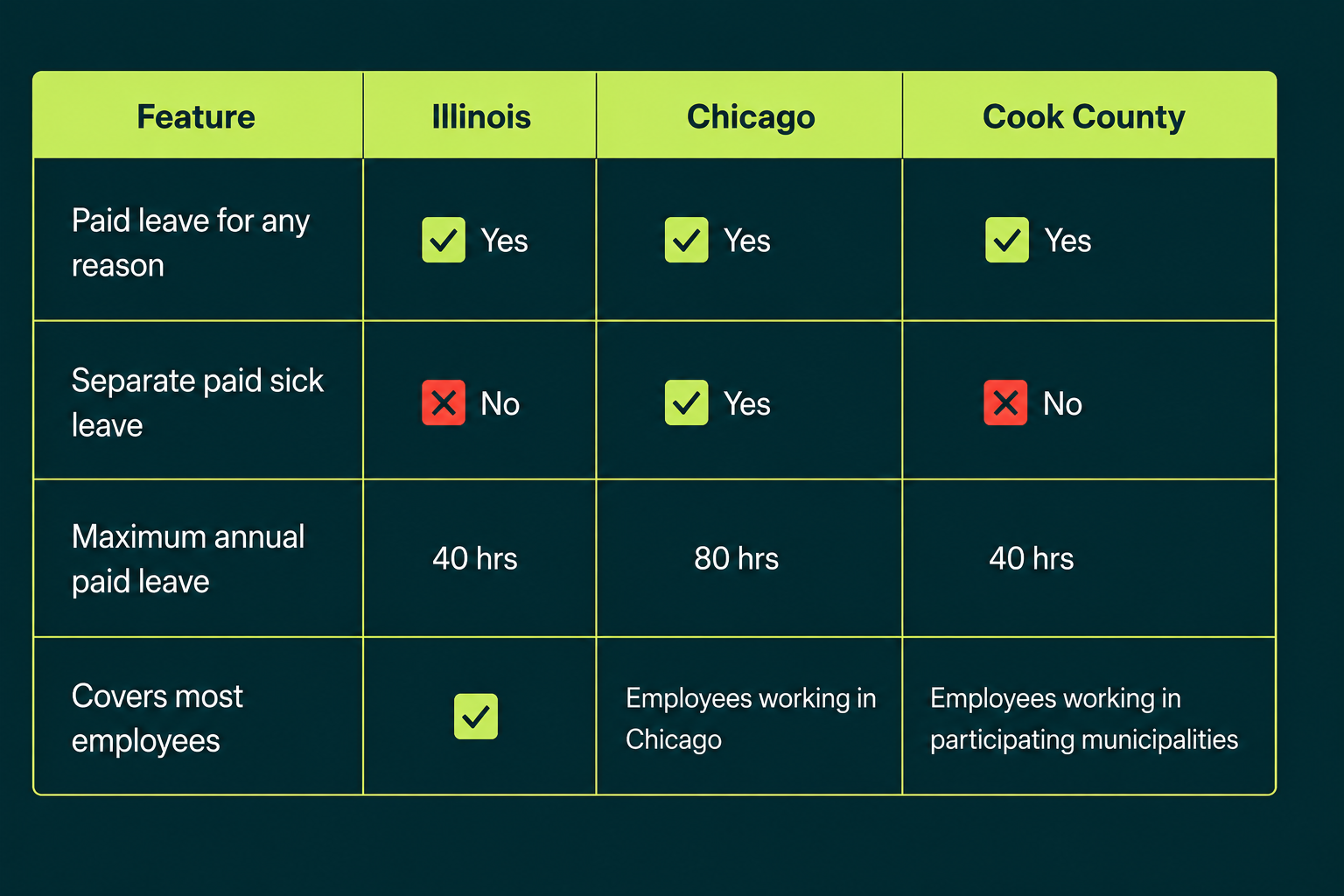
This means many Chicago employees may earn up to 80 hours of paid leave annually.
Cook County Paid Leave Ordinance
Many suburban Cook County employees are covered by the Cook County Paid Leave Ordinance.
Like the Illinois law, employees generally earn:
One hour of leave for every 40 hours worked
Up to 40 hours annually
Leave that may be used for any purpose
However, municipalities may opt out of the ordinance, meaning whether the law applies depends on where the employee works.
Comparison at a Glance
Can Your Employer Deny Paid Leave?
Employers may establish reasonable written policies governing:
Notice requirements
Scheduling procedures
Minimum increments of leave
Documentation when permitted by law
However, employers generally cannot:
Discipline employees for properly using earned leave
Interfere with an employee's exercise of paid leave rights
Require employees to find their own replacement before taking leave (where prohibited by applicable law)
Retaliate against employees for requesting or using protected leave
Protection Against Retaliation
Illinois, Chicago, and Cook County laws all prohibit employers from retaliating against employees who exercise their paid leave rights.
Retaliation may include:
Termination
Demotion
Reduced hours
Discipline
Unfair performance reviews
Threats or intimidation
Denial of promotions
If your employer punishes you for requesting or using earned paid leave, you may have legal claims beyond simply recovering the value of the leave.
Common Violations We See
Employees frequently contact us after employers:
Refuse to allow earned paid leave
Count protected leave against attendance policies
Fail to track or credit earned leave correctly
Fire employees shortly after requesting leave
Retaliate against employees who complain about violations.
These practices may violate Illinois law.
Frequently Asked Questions
-
Under the Illinois Paid Leave for All Workers Act—and generally for Chicago's "Paid Leave" portion—employees typically do not have to provide a reason for taking leave. Different rules may apply to Chicago's Paid Sick and Safe Leave when the leave is used for qualifying health or safety reasons.
-
Yes, in many situations employers may require reasonable notice when the need for leave is foreseeable. Different notice rules may apply depending on which law governs.
-
Coverage generally depends on where your work is performed. Remote employees may still qualify under Chicago or Cook County laws if they perform sufficient work within those jurisdictions.
-
No. Retaliation for exercising paid leave rights is prohibited under Illinois law and applicable local ordinances.
-
A threatening letter from a former employer can be intimidating—but it is not the final word.
Before abandoning a job offer, delaying your career, or assuming a restrictive covenant is enforceable, have the agreement reviewed by an experienced employment attorney. You may have far more options than you think.
How an Employment Attorney Can Help
If your employer denied earned paid leave, disciplined you for using leave, or retaliated after you exercised your rights, you may have legal claims under state or local law.
An experienced employment attorney can evaluate which paid leave law applies to your situation, determine whether your employer violated the law, and help you pursue available remedies.
Contact Luisi Law
At Luisi Law, we represent employees throughout Illinois in disputes involving paid leave, sick leave, retaliation, unpaid wages, discrimination, whistleblower claims, and employment contract matters.
If you believe your employer violated your paid leave rights under Illinois, Chicago, or Cook County law, contact us for a confidential consultation. We'll help you understand your rights and fight for the protections the law provides.